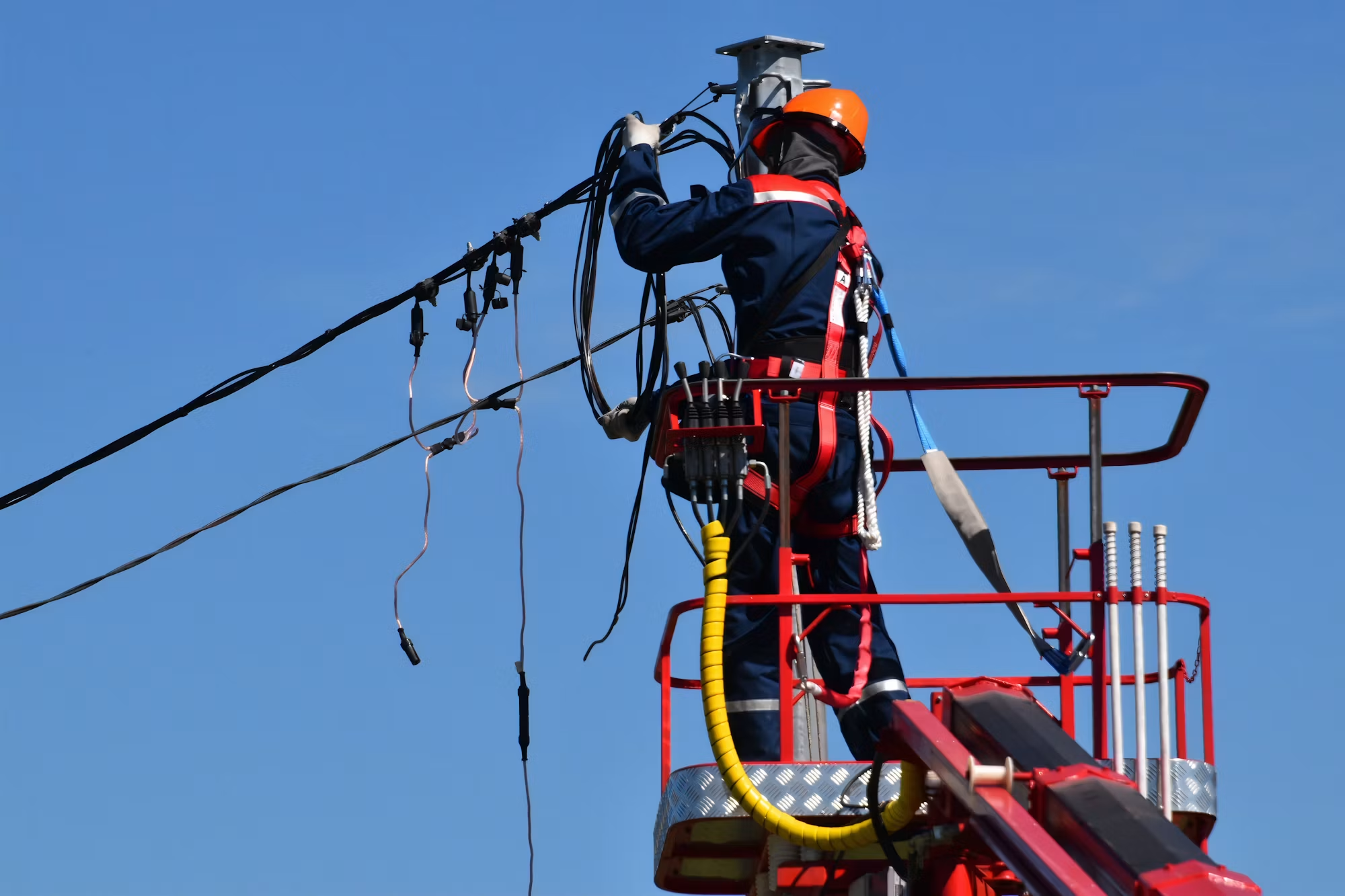
As cities continue to grow and face the challenges of urbanization, the concept of ‘smart cities’ has emerged as a solution to create more efficient, sustainable, and livable urban environments. With the help of advanced technologies such as the Internet of Things (IoT), artificial intelligence (AI), big data, and renewable energy systems, smart cities are poised to revolutionize the way we live, work, and interact with our environment. This article will explore the evolution of smart cities, the technologies that power them, and how they are reshaping urban life for the future.
What Are Smart Cities?
A smart city is a highly connected and technologically advanced urban area where digital technology and data are used to manage and improve services, infrastructure, and resources. The goal of a smart city is to make life easier, safer, and more sustainable for its residents by leveraging technology to optimize everything from traffic flow and energy consumption to healthcare services and public safety. In a smart city, sensors, IoT devices, and data analytics are integrated into the urban infrastructure, allowing for real-time monitoring and management of key aspects such as water distribution, waste management, air quality, and energy use.
The concept of smart cities has gained momentum in recent years due to rapid technological advancements and the increasing strain on urban centers. With the global population projected to reach 9.7 billion by 2050, and more than 68% of the world’s population expected to live in urban areas, the need for smarter, more sustainable cities has become more urgent than ever.
The Technologies Behind Smart Cities
At the heart of every smart city is the integration of various technologies that enable it to function more efficiently and sustainably. These technologies include IoT, big data analytics, AI, cloud computing, and renewable energy systems. Each of these technologies plays a vital role in the development and operation of smart cities.
The Internet of Things (IoT)
The Internet of Things refers to the network of interconnected devices that communicate with each other over the internet. In a smart city, IoT devices are embedded in everyday objects such as streetlights, traffic signals, waste bins, and even buildings. These devices collect and transmit data, which is then analyzed to improve urban systems.
For example, smart streetlights equipped with IoT sensors can adjust their brightness based on real-time traffic and pedestrian activity, reducing energy consumption. Similarly, smart waste management systems can use IoT-enabled sensors in waste bins to monitor their fill levels, alerting waste management teams when it’s time for collection. These small innovations may seem simple, but when implemented at scale, they can lead to significant improvements in efficiency, cost savings, and sustainability.
Big Data and Data Analytics
Smart cities generate vast amounts of data from IoT sensors, social media, public records, and other sources. The ability to collect and analyze this data in real time is one of the key factors that make cities ‘smart.’ By leveraging big data analytics, city planners and administrators can gain valuable insights into patterns of behavior, resource usage, and infrastructure performance.
For instance, traffic management systems can analyze data from sensors embedded in roadways to predict traffic congestion, allowing for more efficient management of traffic signals and reducing overall congestion. In addition, data analytics can help optimize the allocation of resources like water and energy, improving efficiency and reducing waste.
Artificial Intelligence (AI) and Machine Learning
AI and machine learning are becoming increasingly important in the development of smart cities. AI systems are capable of analyzing large datasets, identifying patterns, and making predictions or decisions without the need for human intervention. In smart cities, AI can be used to optimize everything from public transportation schedules to energy distribution.
For example, AI-powered traffic management systems can predict traffic patterns and adjust signals in real-time to reduce congestion. Similarly, AI can be used in energy grids to balance supply and demand, ensuring that energy resources are distributed efficiently. As the technology continues to improve, AI will play an even greater role in automating urban processes, making cities more responsive and adaptive.
Cloud Computing
Cloud computing is another essential technology that enables smart cities to function effectively. Cloud platforms provide the infrastructure needed to store, manage, and process the massive amounts of data generated by IoT devices and sensors. By using cloud computing, smart cities can ensure that data is stored securely and can be accessed by relevant parties in real time.
In addition to data storage, cloud computing provides the scalability needed to accommodate the growing volume of data produced by expanding urban areas. The cloud also allows for easier collaboration between different sectors, as data can be shared seamlessly between government agencies, utility providers, and other stakeholders.
Renewable Energy Systems
A smart city isn’t just about technology; it’s also about sustainability. Renewable energy plays a crucial role in powering smart cities and reducing their environmental impact. Solar panels, wind turbines, and geothermal systems are increasingly being integrated into urban infrastructure to provide clean, renewable energy.
For example, solar panels can be installed on rooftops to power buildings and streetlights, while wind turbines can generate electricity in areas with sufficient wind resources. Smart grids, which use advanced sensors and data analytics to balance energy supply and demand, can also be integrated into cities to ensure efficient use of energy resources and reduce waste.
Key Benefits of Smart Cities
The implementation of smart city technologies brings numerous benefits to both residents and city administrators. These benefits include improved quality of life, enhanced sustainability, increased efficiency, and reduced costs.
Improved Quality of Life
One of the primary goals of smart cities is to improve the quality of life for their residents. By integrating technology into urban environments, cities can become safer, more convenient, and more enjoyable places to live. For example, smart healthcare systems can monitor patients’ health remotely, allowing for better management of chronic conditions. Smart public transportation systems can provide real-time updates to passengers, improving convenience and reducing wait times.
Additionally, smart cities can help reduce crime through the use of surveillance cameras, AI-powered crime prediction algorithms, and improved emergency response systems. By leveraging technology to create safer, more comfortable environments, smart cities can foster a higher standard of living.
Sustainability and Environmental Impact
Smart cities have the potential to significantly reduce their environmental impact by optimizing resource usage and incorporating sustainable technologies. For example, smart buildings equipped with energy-efficient systems can reduce energy consumption, while smart water management systems can help conserve water resources. Additionally, the integration of renewable energy systems can reduce a city’s reliance on fossil fuels, helping to lower carbon emissions and mitigate climate change.
Moreover, waste management systems that use IoT sensors to monitor bin levels and optimize collection routes can reduce fuel consumption and greenhouse gas emissions, contributing to a cleaner environment.
Efficiency and Cost Savings
By using technology to streamline urban systems, smart cities can become more efficient and cost-effective. For example, automated traffic management systems can reduce congestion, saving time and fuel for commuters. Energy-efficient buildings and smart grids can lower utility costs, while IoT-enabled systems can improve the management of public services like waste collection, water distribution, and street maintenance.
By improving the efficiency of urban systems, smart cities can also reduce the need for costly infrastructure projects and maintenance, saving taxpayer money in the long term.
Challenges and Concerns
While the benefits of smart cities are clear, there are also challenges and concerns that must be addressed. One of the most significant challenges is the issue of data privacy and security. With so much data being collected from residents and various urban systems, it’s crucial that this information is protected from cyber threats and misuse.
Additionally, the integration of smart city technologies requires significant investment in infrastructure and coordination between various stakeholders, including government agencies, private companies, and citizens. Overcoming these challenges will require collaboration and careful planning to ensure that smart cities are equitable, secure, and accessible for all residents.
The Future of Smart Cities
As technology continues to advance, the potential for smart cities to improve urban living will only grow. With innovations in AI, IoT, renewable energy, and data analytics, cities will become increasingly efficient, sustainable, and responsive to the needs of their residents. The future of urban life is undoubtedly smart, and by harnessing the power of technology, we can create cities that are more livable, more sustainable, and better equipped to face the challenges of the 21st century.